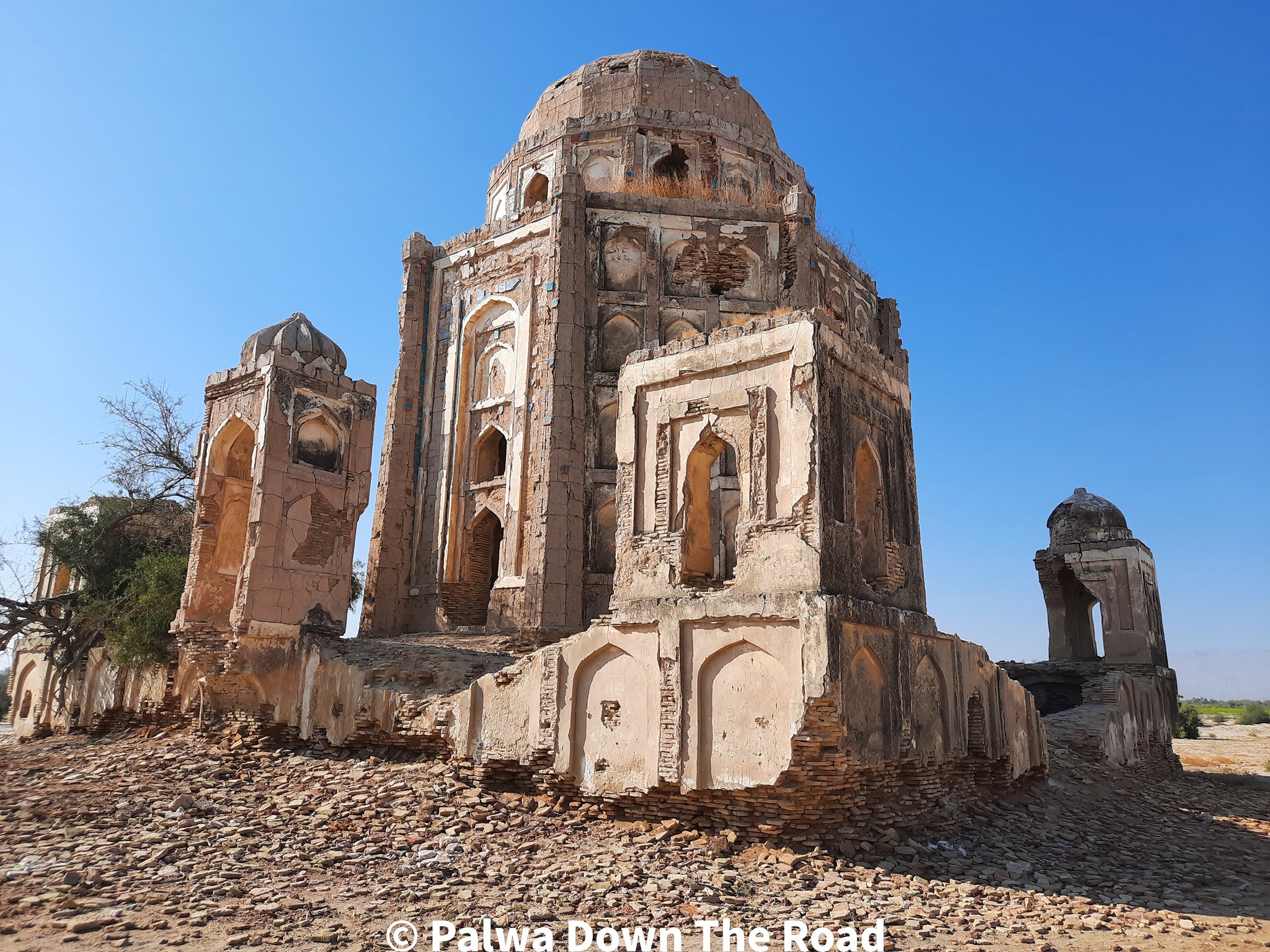
The majestic Moti Gohram tomb is locally known as the Taj Mahal of Balochistan. Some stories remain alive in human history. One of them is the Taj Mahal of Balochistan. I recently went here with my wife and child. We were in our final phase while traveling in Balochistan.
Taj Mahal of Balochistan
The tomb at Gandawah is octagonal with thin towers. Architecturally, this tomb has no similarity to the province of Balochistan. The new town of Gandava is in the Jhal Magsi District of Balochistan.
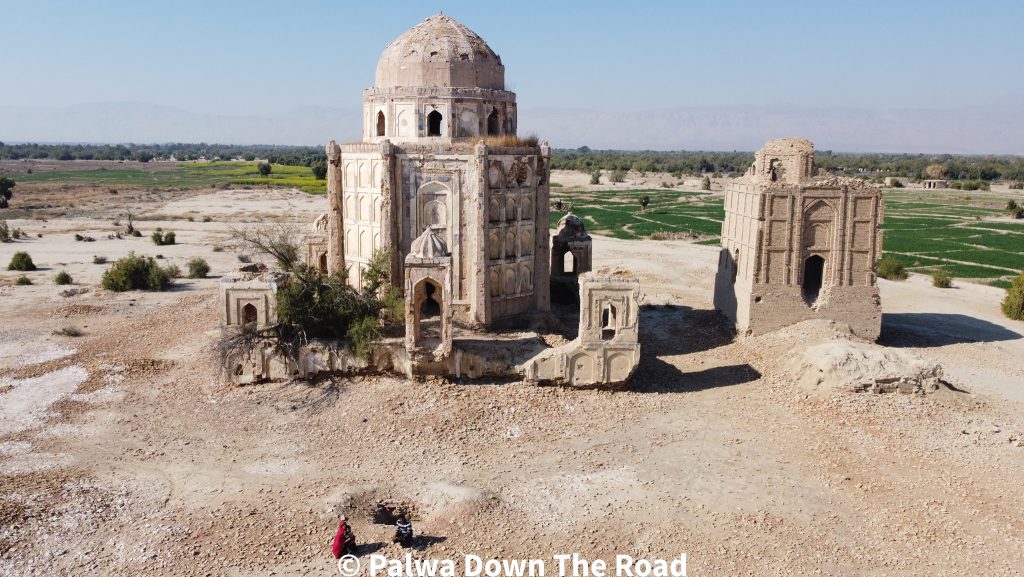
When people think about the Taj Mahal, Agra comes to mind. But one Taj Mahal is also in the Jhal Magsi district, which is a beauty in itself. It is the tomb of Moti Gohram, which is the most important of all graves in Jhal Magsi.
Gandawah and Archaeological Sites
Gandava is blessed with many archaeological places in Jhal, Gajen, and Shoran. These sites relate to the Indus Valley Harappa and Jhukar Phases. Presently, Gandava city mainly consists of Sindhi, Baloch, Pathan, Brahui tribes, and Hindu inhabitants. Rich in fields, gardens, and plains, Gandava is known as Qandabil to historians.
Arab Armies in the Qandabil Region
According to Chachnama, the Arab armies arrived in the Qandabil region as early as 644 AD. Al-Muhallab ibn Abi Sufra (632-702), the Arab general from the Azd tribe, captured Gandava under the Umayyad caliph Mu’awiya who ruled from 661-680 AD.
He worked as a governor in Fars, Mosul, Armenia, Khurasan, and Azerbaijan. According to unwritten folklore, narrated by Syed Anwer Ali Shah of Gandava, when the Arabs first arrived in Gandava, they saw a stream speedily flowing from the mountains to the city.

Thirsty, they began drinking from the stream and said to one another, “Haza Qandabil!” In Arabic, ‘Qand’ means ‘sugar’, and ‘bil’ means ‘bowl’ or ‘pot.’ In short, they said ‘sweet water land.’ So that’s how the place came to be known as Qandabil.
The Story of Moti Gohram Tomb at Gandava
The tomb of Moti Gohram is famous due to its style of construction. The story of this tomb resembles with taj mahal of Agra. Sardar Gohram and Mai Moti were husband and wife. Mai Moti was a rich woman who had a lot of wealth. So the wife of gohram wished that we should construct a tomb. She also planned that after their death, they got buried there.
At this point, the construction of the tomb started. The laborers from remote areas came here to construct this tomb. The process for the construction of bricks was made here. According to some sources, Moti and Gohram buried their wealth in the tomb while they were alive. After the completion of the mausoleum, the majority of the workers were killed.
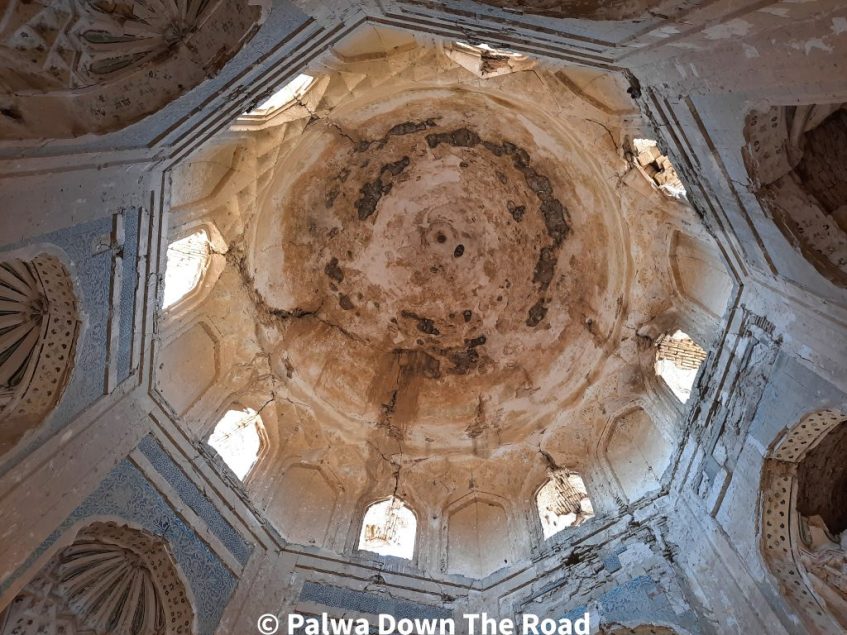
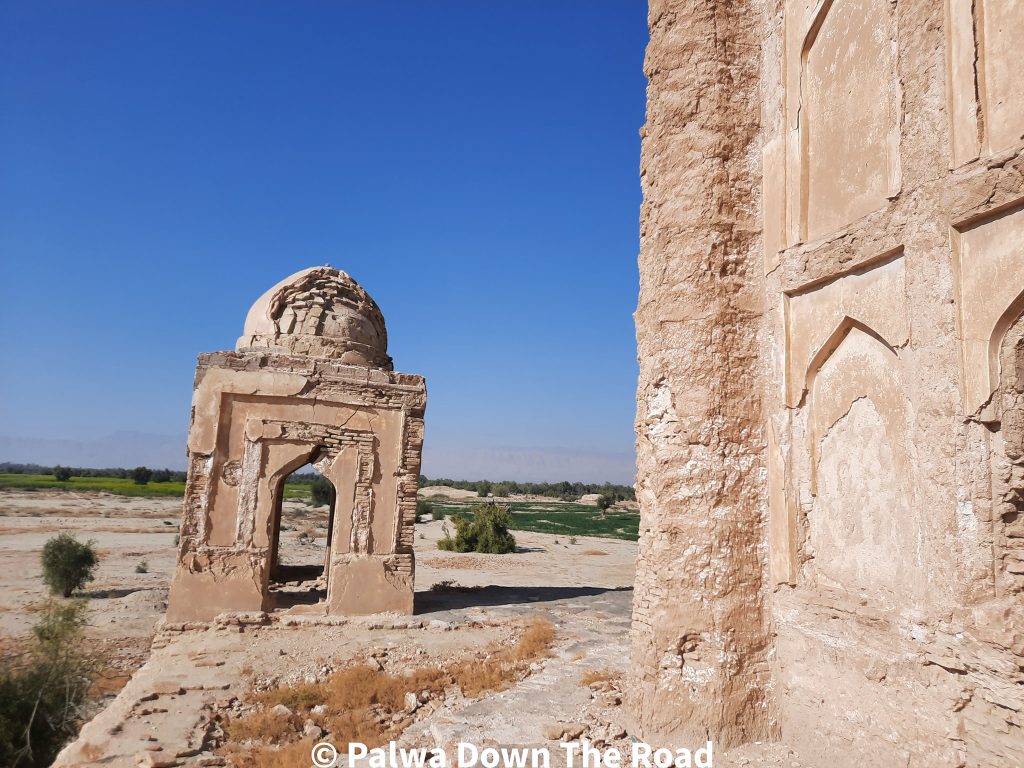
Such a practice was to avoid the construction of such a tomb again. The grave of both husband and wife is inside the tomb. The conditions of these graves are not well now. Such a unique-style tomb is hardly found anywhere in Balochistan. The minarets of the Moti Gohram tomb are also in worse condition.
Somewhere blue tiles are still left, which tells the value of this tomb at any time. The construction of this tomb took place on a hillock. Over time, it has come to ground level.
There is also a mosque next to this tomb. The upper roof has been ruined over time. Hardly anyone comes here as the tomb is in bad condition. People destroyed its beauty in search of treasure.
Syed Noor Shah Hussaini, Mian Saleh, Pauch, Altazai Ayub Shah Bukhari, Murad Kaleri, Meeri of Khan-e-Qalat, and Jamia Mosque Gandava are the best examples of Islamic architecture in the area. The place is a worthwhile visit. But efforts need to be made to promote and protect the rich cultural heritage in Balochistan.
Hopefully, this blog will inspire you to visit this fantastic place of Jhal Magsi. Also, if you have any questions on Balochistan or my traveling experience on bicycles/motorbikes, please comment below or email me, and I’ll try to reply to you as soon as possible.