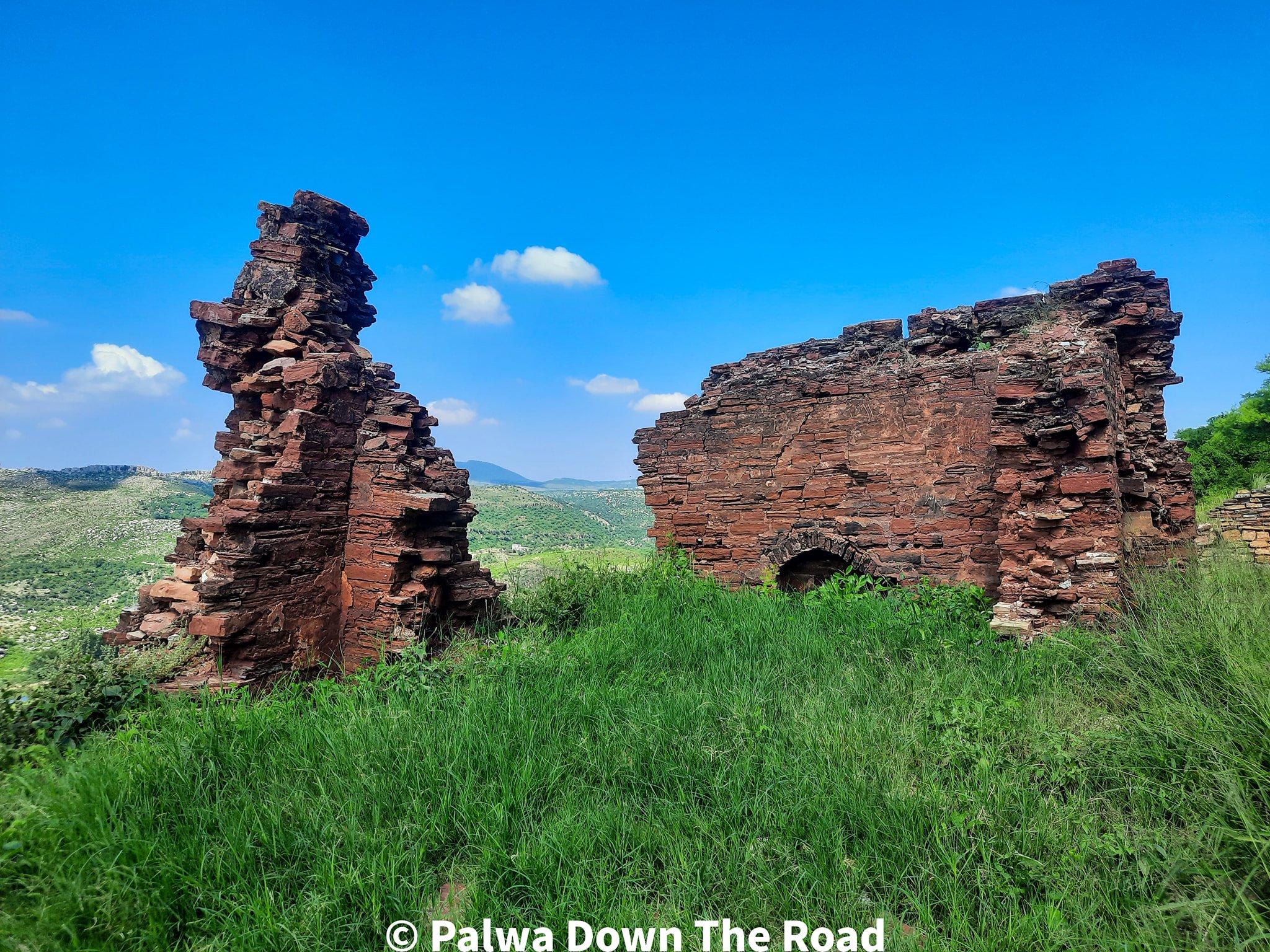
Kusak Fort was built in the 11th century by Raja Jodh, son of legendary Janjua Sultan Raja Mall Khan Janjua. He also built the Malot Fort in the 10th century. Due to the continuous threats of invasions, Raja Jodh used the best of his mind while building the Kusak Fort on 13 acres. Thus, the fort at the mountain’s peak was named “Jodh Mountain.”
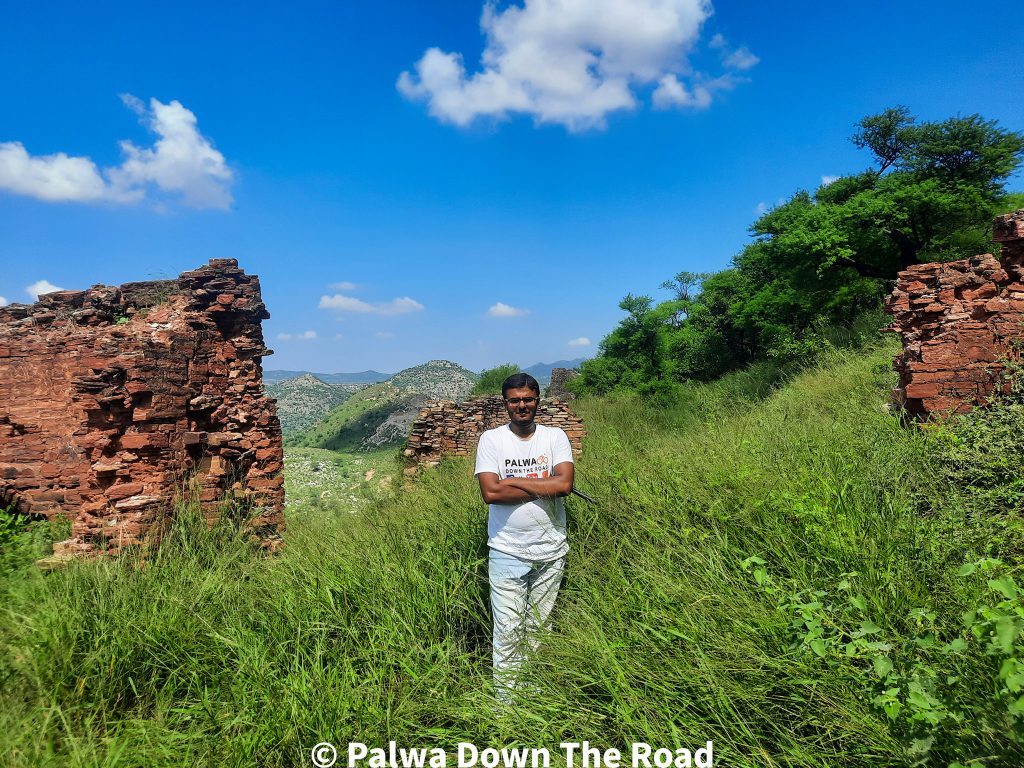
The trek was not challenging, and in about twenty minutes, we entered the fort through an essentially non-existent gate.
Structure of Kusak Fort
All the construction was done with local red stone and soil. A palace for the king was constructed traditionally on the premises of the fort. At the same time, 70 houses were built in the castle for the troops. On the northern side, the castle had two large gates and two ponds to store water.
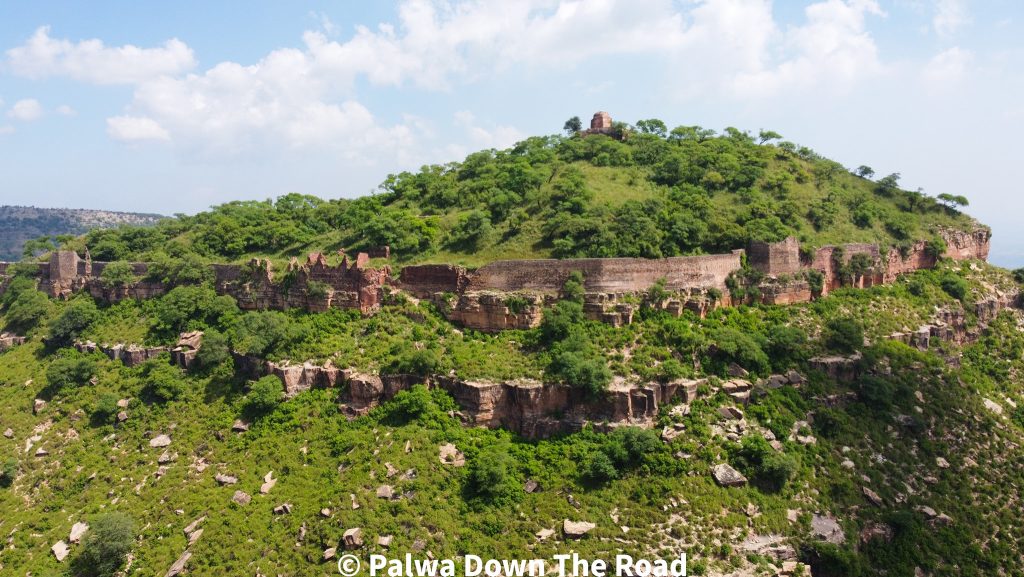
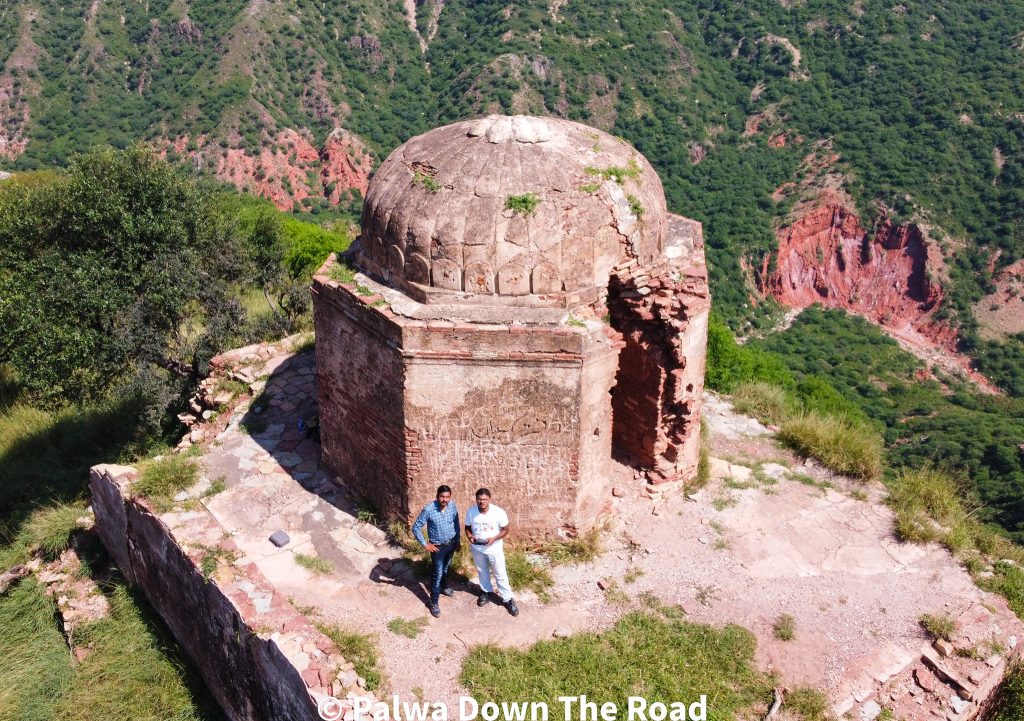
At the same time, as most soldiers belonged to Hinduism, the king had also constructed temples for them. Sheds were also built in the fort to store grains. A large wall of 370 feet in height was built around the fort.
If you are more of a visual person, then please watch the following video, which summarizes my Kusak Fort trip:
The Salt Range was a perfect pass for attacking kings from Iran, Turkey, and Afghanistan. The Kusak State was attacked consistently, with its kings attempting their best to save their motherland. Unfortunately, they sometimes respond to foreign invaders with the same coin and sometimes by allying with them to help them establish their kingdom in the sub-continent.
According to historians, the Kusak State experienced a harsh blow when Jalaluddin Firoz Shah Khilji, the first king of the Khilji Dynasty in India, attacked it in 1290 AD.
After experiencing a crushing defeat by Khilji, the Janjua Rajputs organized their grip on the area with the passage of time. When Amir Taimur started moving towards it, the Kusak State was about to be damaged again in 1398 AD.
Still, the then leader of the state, along with Janjua Sardars, guaranteed the invader that they would render him logistic support in defeating Delhi. Thus he forgave the fort from the attack.
The year 1810 proved the poorest for Janjua Rajputs when the patron of the Sikh Empire in Punjab, Maharaja Ranjit Singh, blockaded the fort. Sultan Fateh Mohammad Khan, the then king of Kusak State, gave a hard time to Raja Ranjit Singh.
The Sultan kept on battling for six months and kept Ranjit Singh at bay. Finally, seeing no other option, Ranjit Singh had to strike a ceasefire with Sultan Mohammad. However, the long blockade of six months cast a massively on the lives of the residents of Kusak Fort as they fell short of food and drinking water.
Finally, the Sultan and all other members of his tribe shifted to Haranpur and stayed there for 40 years. The Sultan died in Haranpur in 1830. His family returned to their homeland in 1850, where they set the grounds of Lehr Sultanpur village, next to Kusak village. The lost Kusak State remained with Sultan Fateh Mohammad Khan’s siblings and was still owned by his successors.
Location of Kusak Fort
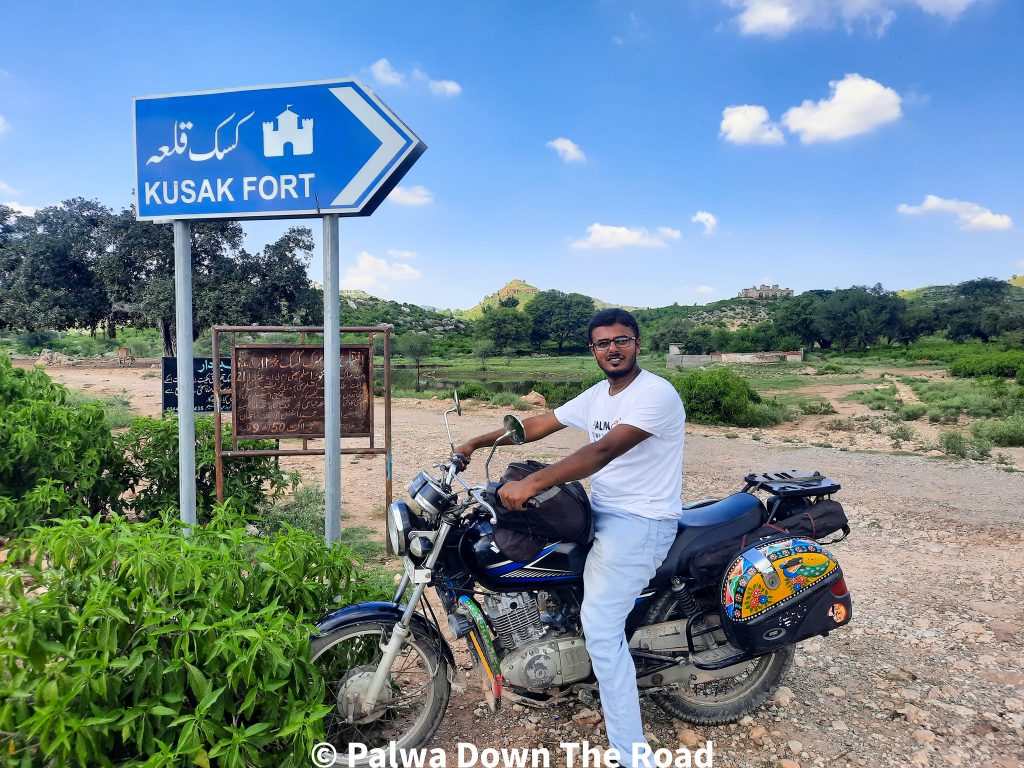
Kusak Fort stands at a mound in Kahoon Valley, the picturesque hilly terrain of the Salt Range between Kallar Kahar and Choa Syedan Shah in the district of Chakwal Punjab. It is 48km to the south of Chakwal city and 25km to the southern-east of Kallar Kahar.
Hopefully, this blog will inspire you to visit Kusak Fort. Also, if you have any questions on Punjab or my experience traveling on a bicycle/motorbike, please comment below or email me. I’ll try to reply to you as soon as possible. For more Articles on Chakwal, you can read here